
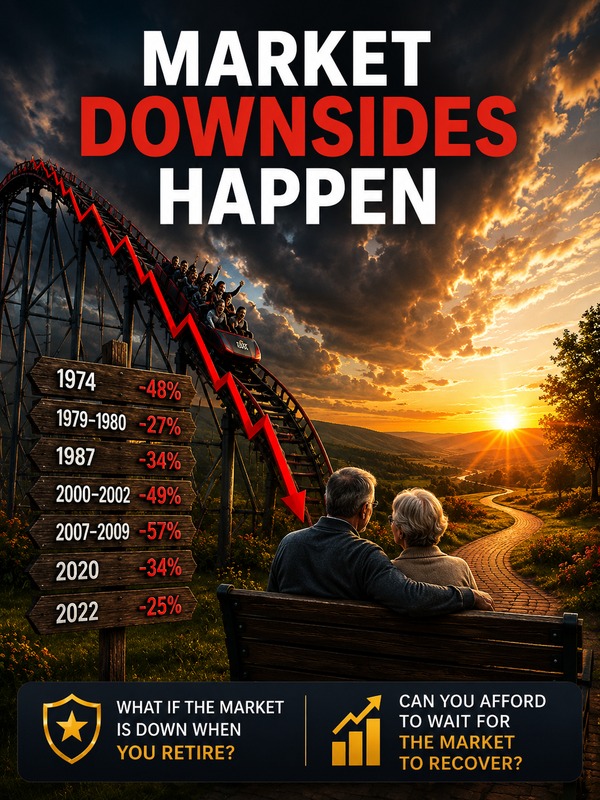
Market downturns are not unusual. They are part of investing. The problem is not that markets sometimes fall. The problem is what happens when they fall at exactly the wrong time for you.
Retirement changes the rules
While you are working, a market decline can be painful without necessarily being disastrous. You may still have years of contributions ahead of you, and you may have time to wait for a recovery.
Retirement is different. Once you begin taking withdrawals, the account may be asked to do two things at once: recover from losses and send you money for living expenses. Selling investments after a decline can lock in losses and leave fewer dollars participating in a later recovery. That is the heart of sequence-of-returns risk.
The order of returns matters. Two people can experience similar long-term average returns and still have very different retirement outcomes if one encounters major losses early in retirement while making withdrawals.
Can you afford to wait?
That is the question behind the roller coaster on the tile. If the market drops sharply, can you leave your investments alone long enough to recover? Or will you need to sell because the mortgage, groceries, utilities and vacations do not wait for Wall Street?
A retirement plan should identify which expenses must be paid regardless of market conditions, which assets are exposed to loss, and where income can come from during a bad market. Depending on the person, that may mean cash reserves, guaranteed income sources, protected strategies, or a deliberate combination of different kinds of assets.
Growth is only one job
Accumulation is about growing a pile of money. Retirement income planning is about turning that pile into dependable spending power. Those are related jobs, but they are not the same job.
The point is not to eliminate every market investment. Growth may remain important during a retirement that could last decades. The point is to avoid having every dollar—and every essential expense—dependent on what the market happens to be doing that month.
The useful question is simple: If the market is down when you retire, does your plan still work?
Further reading: Investor.gov explains investment risk and diversification at Investor.gov.